

ACL: Why do I need it?
ACL tears are frequently discussed in sports media and are a major concern for high school athletes participating in court or field sports. Nearly every competitive athlete knows someone who has torn their ACL and undergone the extensive physical therapy required for recovery. This raises the question: what exactly is the ACL?
The ACL is the anterior cruciate ligament. It is one of two cruciate (crossing) ligaments in the knee. The other is the PCL or posterior cruciate ligament. To further break down knee anatomy, there are also two collateral (running parallel to one another) ligaments. They are known as the MCL, the medial collateral ligament, and the LCL, the lateral collateral ligament. One additional tissue in the knee that you have probably heard of is your meniscus, which bridges the gap between the tibia (your shin bone) and femur (your thigh bone). All of these tissues, plus a few more, provide stability to the knee and work in conjunction with your muscles to make sure you are safely able to run, jump, cut, and perform all other athletic activities.
For today, let’s focus on the ACL. Although the MCL is the most commonly sprained ligament in the knee, the ACL gets all of the attention. This is because ACL injuries are often season ending, and potentially career ending, injuries. The ACL’s main function is to limit forward movement of the tibia (your shin bone). The movement happens most prominently when your knee is slightly bent and slightly inward (valgus), as compared to normal resting position. This occurs often during cutting motions, and is primarily where you will see ACL tears occur. When the ACL tears, it is usually non-contact (i.e. during a cutting motion), though can also occur with another player falling on an athlete's knee and driving it into that bent and valgus position.
So why is this season ending? An athlete will likely undergo an ACL reconstruction (different from an ACL repair), where the surgeon will harvest a part of one of the tendons in the athlete’s leg, usually from either the patellar tendon, the quad tendon, or the hamstring tendon. The surgeon will take that tendon and put it in place of where the ACL used to be. The body will then undergo a process that turns that tendon into a ligament. Unfortunately, that new ligament will not be as strong as your old one, which is why physical therapy and rehab is so important.
Note: A tendon connects muscle to bone. A ligament connects bone to bone. While they are both made of similar connective tissue, they serve very different functions.
The above process is complex and can take over a year to fully complete. While the body is performing that process, the athlete is also fighting an uphill battle to regain strength of the muscle from which the tendon was harvested. In recent years, surgeons have been performing more and more grafts from the quad muscle (patellar tendon or quad tendon). The quad is one of the most important, if not the most important, muscle related to protecting the knee after ACL surgeries. The quad acts as a dynamic stabilizer to the knee, especially during athletic movements that are required for sport. There is also a significant amount of literature stating that quadriceps symmetry is strongly correlated with return to sport success, reduced risk of re-injury, and improved patient-reported function. To achieve appropriate symmetry of strength and power of the lower body, it usually takes at least 9-12 months, which is the typical duration of physical therapy and limited sports participation.
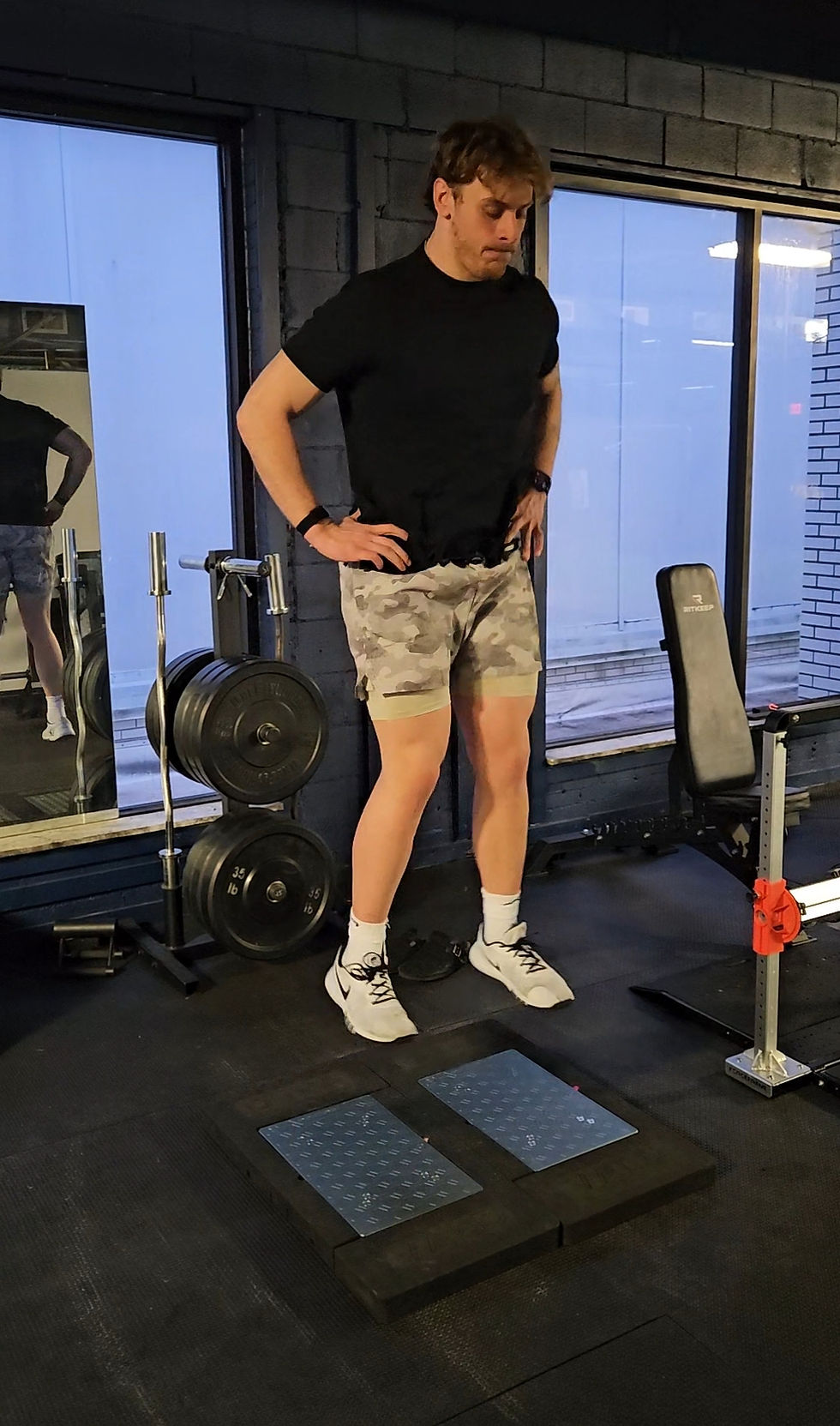
The athlete and their therapy team should be focused on assessing and training the strength and power of the whole lower extremity, with specific attention to the quadriceps muscles. Stay tuned for more on my go-to tests for clearing someone after an ACL reconstruction.
Phase | Timeframe | Key Changes |
Early healing / necrosis | 0–4 weeks | Graft cells die, revascularization begins. |
Revascularization / cellular proliferation | 4–12 weeks | New blood vessels grow in, fibroblasts infiltrate, collagen begins to remodel. |
Remodeling / ligamentization | 3–6 months | Collagen fibers realign, graft starts to resemble native ligament structure. |
Maturation / functional ligamentization | 6–12 months (sometimes up to 18 months) | Mechanical properties improve, graft strength approaches native ACL. |


Comments